PERSONAL
FROM CAGE TO ROAD. the fight that never ended.
A professional fighter's career was interrupted by a rare brain disease. What happened next became a mission that has reached millions of people worldwide.
By Vince Murdock, moyamoya survivor · Published 20 February 2026 · Updated 8 April 2026 · 9 min read
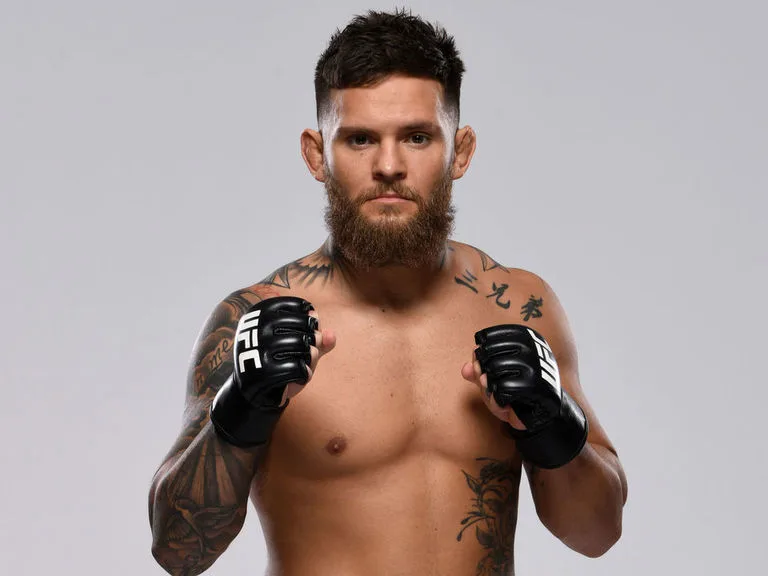
Before the diagnosis, before the surgery, before the bicycle, there was the cage. Vince Murdock spent the better part of a decade training and competing as a professional mixed martial artist. His record stood at 12 wins, 6 losses, 0 draws, with 9 of those wins coming by knockout or technical knockout. He was not padding a record against easy opponents. He was fighting at a high level, week after week, training alongside some of the best fighters in the world.
Vince trained at Team Alpha Male in Sacramento, California, the gym that produced multiple UFC champions including Urijah Faber, Cody Garbrandt, and T.J. Dillashaw. The training environment was relentless. Morning sessions, afternoon sparring, evening conditioning. The sport demands everything, your body, your time, your identity. For years, being a fighter was not just what Vince did. It was who he was.
That identity was about to be tested in a way no opponent in the cage could match.
In September 2019, Vince was preparing for another fight. As part of the licensing process, athletic commissions require medical clearance including brain imaging. It is a standard precaution for combat sports athletes. Most fighters pass through without a second thought. The scan is a formality, a box to tick before stepping into the cage.
Vince's scan was not a formality. The MRI revealed significant narrowing of the internal carotid arteries, the main vessels supplying blood to the brain. Further imaging confirmed what the doctors suspected: moyamoya disease. The tiny collateral vessels that give the disease its name, the "puffs of smoke" on the angiogram, were already forming. His brain had been quietly starving for blood flow, and neither Vince nor anyone around him had known.
The diagnosis was a shock. Vince was an elite athlete in peak physical condition. He had no obvious symptoms that could not be explained by the demanding nature of professional fighting. Headaches after training? Normal. Occasional light-headedness during intense sparring? Everyone gets that. But underneath the surface, his brain's blood supply was failing.
Once the diagnosis was confirmed, Vince was referred to Stanford University Medical Centre and Dr Gary Steinberg, one of the world's leading experts in moyamoya disease and cerebrovascular surgery. Dr Steinberg has spent decades perfecting revascularisation techniques and has performed thousands of bypass procedures on moyamoya patients from around the world.
On 13 November 2019, Vince underwent a direct bypass procedure. The surgery involved connecting a healthy artery from the scalp to a brain artery beyond the point of narrowing, creating a new pathway for blood to reach the oxygen-starved tissue. A portion of Vince's skull was removed to access the brain's surface, a procedure known as a craniotomy. The operation lasted several hours.
The results were remarkable. Post-operative imaging showed that the bypass had quadrupled the blood flow through the newly connected vessel. The surgery was a technical success. But recovery was only beginning. Vince was a professional athlete who had just had a quarter of his skull removed. The road back would be long, uncertain, and unlike anything the cage had prepared him for.
NOV 13
2019.
STANFORD.
Eight hours of direct bypass surgery with Dr Gary Steinberg. Two days before the operation, Vince married Kira. He became the first professional athlete to undergo moyamoya brain bypass surgery.
Read the full story →The weeks immediately following surgery were the most difficult of Vince's life. Simple tasks required extraordinary effort. Walking across a room was exhausting. Reading was challenging. The constant headaches, the swelling, the uncertainty about whether his brain was healing properly, all of it weighed on a man who had built his life around physical capability and mental toughness.
But fighters are trained to push through discomfort. The discipline that carried Vince through thousands of hours of MMA training became the foundation of his recovery. He followed his medical team's guidance, rested when he needed to, and began gentle movement as soon as he was cleared. Walking became light exercise. Light exercise became cycling. And cycling became something far more than rehabilitation.
Vince's wife, Kira Feightner, was instrumental during this period. She managed the logistics of recovery, coordinated medical appointments, and provided the emotional stability that made the difference between giving up and pushing forward. Behind every comeback story, there is a support system. Kira was Vince's.
The transition from fighter to cyclist was not planned. Vince needed low-impact cardiovascular exercise that would not risk further trauma to his healing brain. Running created too much jarring impact. Swimming required facilities and scheduling. The bicycle was accessible, adjustable, and forgiving. He could ride for 20 minutes or 2 hours, at his own pace, stopping when he needed to.
What started as physical therapy became something deeper. On the bike, Vince found the same clarity he had experienced in the cage: the present moment demanding his full attention, no room for worry about the past or anxiety about the future. The rhythm of pedalling, the focus on breathing, the challenge of climbing, it all felt familiar. It felt like training. It felt like purpose.
Within months, the rides grew longer. Local loops became century rides (100 miles). Century rides became multi-day events. By the time Vince had accumulated 10,000 miles on the bike, he had discovered that cycling was not just healing his body. It was giving him a platform to talk about moyamoya disease in a way that resonated with people who had never heard of it.
Approximately 11 months after having a portion of his skull removed, Vince Murdock did something most neurosurgeons would not have predicted. He returned to professional MMA competition. The decision was not made lightly. Extensive imaging confirmed that the bypass was functioning well, blood flow to his brain was stable, and the surgical site had healed completely.
The comeback fight was not about winning or losing. It was proof. Proof that moyamoya disease does not have to end an athletic career. Proof that brain surgery is not a death sentence for physical ambition. Proof that with the right surgical team, proper rehabilitation, and relentless determination, the boundaries of what is possible after moyamoya can be pushed far beyond what most people imagine.
Vince's return to fighting made headlines. ESPN covered the story. ABC10 in Sacramento followed his journey. The US Sun in the UK ran a feature on the fighter who had a quarter of his skull removed and came back to compete. Suddenly, millions of people who had never heard the word "moyamoya" were learning about it through Vince's story.
The media coverage of Vince's comeback brought something unexpected: messages. Hundreds of them. From moyamoya patients who had never met anyone else with the disease. From parents whose children had been diagnosed and who were terrified. From adults who recognised their own symptoms in Vince's story and were now seeking proper diagnosis. Each message reinforced the same truth: awareness was desperately needed.
Miles for Moyamoya grew from that realisation. Vince combined his two worlds, the discipline of professional sport and the urgency of rare disease advocacy, into a single mission. Every mile ridden was a conversation starter. Every race entered was a platform for visibility. Every media interview was a chance to say the word "moyamoya" to an audience that had never heard it before.
The initiative has raised over $36,000 for moyamoya research and awareness. But the real impact cannot be measured in dollars. It is measured in the patients who sought earlier diagnosis because they heard Vince's story. In the doctors who added moyamoya to their differential diagnosis because of a feature they read. In the families who felt less alone because someone was willing to share their experience publicly.
Vince is not finished. The mission grows with every mile, every event, every conversation. Upcoming plans include more ultra-endurance cycling events, expanded partnerships with neurology research programmes, and deeper community support for newly diagnosed patients and their families. The goal is not just awareness. It is systemic change in how moyamoya disease is detected, treated, and supported.
The fight has changed shape. The cage has been replaced by open roads, gravel paths, and mountain climbs. The opponent is no longer a person across the ring. It is a disease that hides in the brain's blood vessels, affecting 1 in 100,000 people, most of whom will not know they have it until something goes catastrophically wrong.
But the fighter's mindset remains. Prepare thoroughly. Show up consistently. Never stop until the job is done. For Vince Murdock, that job is making sure no one faces moyamoya disease alone, uninformed, or without hope.
If you or someone you love has just been diagnosed with moyamoya disease, know this: it is not a death sentence. It is a serious condition that requires expert medical care, but people live full, active, extraordinary lives after treatment. Vince went from brain surgery to a professional MMA fight in 11 months. He has ridden over 10,000 miles on a bicycle. He is living proof that the diagnosis is not the end of the story.
Find the best surgical team you can. Stanford, Boston Children's Hospital, and several centres in Japan have deep expertise. Ask questions. Seek second opinions. Connect with other patients. And remember that your life after moyamoya can be bigger, more purposeful, and more meaningful than anything you imagined before.
Last updated: 8 April 2026.
Every time Vince's story reaches a new person, the chances of earlier moyamoya diagnosis increase. Share it with someone who needs hope, awareness, or inspiration.