RECOVERY
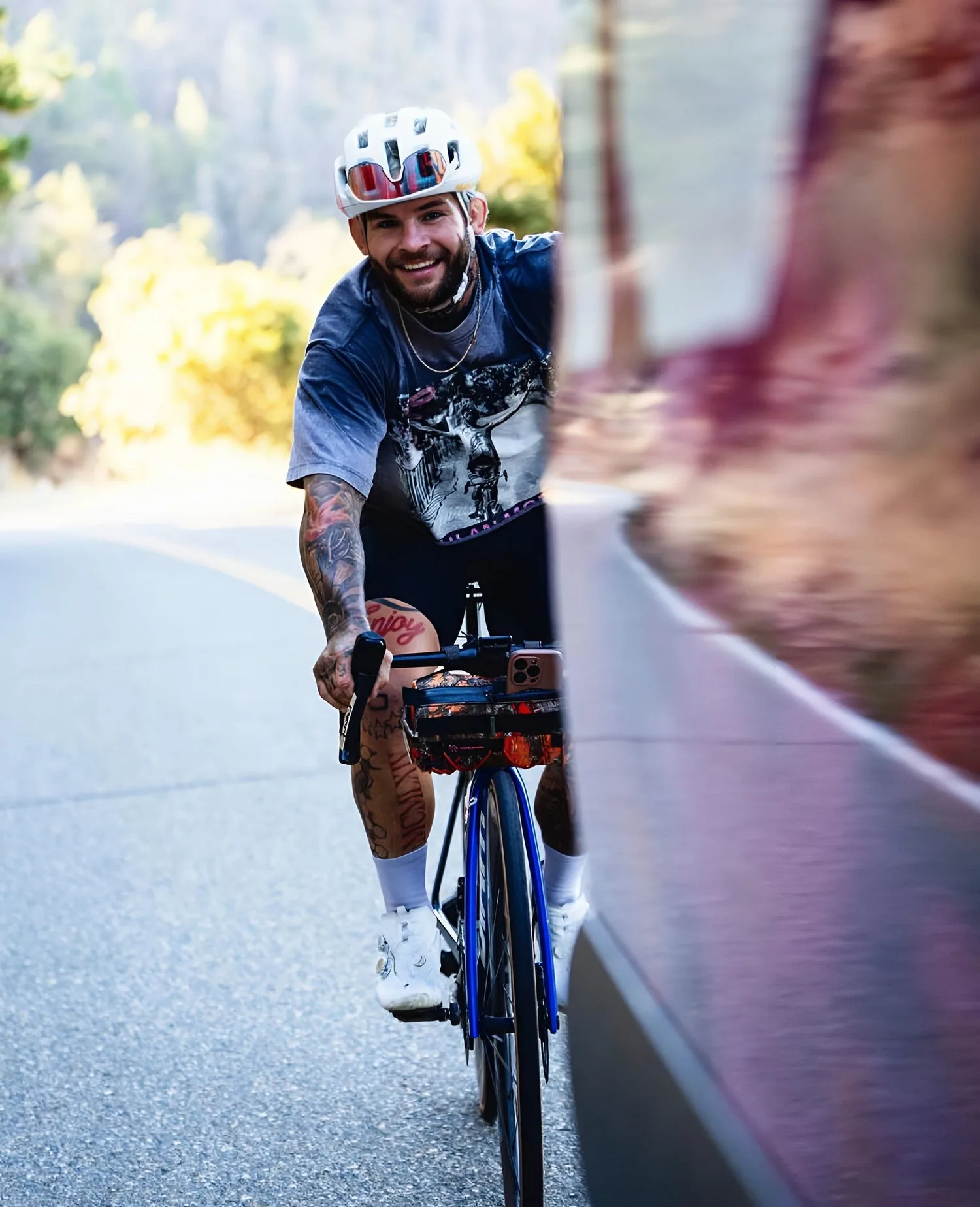
HOW CYCLING SAVED MY BRAIN. every mile was the medicine.
After brain surgery, doctors told me to take it easy. Instead, I rode 10,000 miles. And my brain thanked me for it.
By Vince Murdock, moyamoya survivor · Published 10 January 2026 · Updated 5 April 2026 · 8 min read
After brain surgery, the medical guidance is clear and sensible: rest, recover, avoid anything that could compromise healing. No contact sports. No extreme exertion. No activities that could cause sudden changes in blood pressure or risk head trauma. For a professional MMA fighter who had just undergone a craniotomy, the list of things I could not do was far longer than the list of things I could.
The bicycle was not prescribed by anyone. No doctor wrote "ride 350 miles through Kansas gravel" on a recovery plan. But when I started pedalling those first tentative miles around my neighbourhood in Sacramento, something shifted. My head felt clearer after a ride than before. The headaches that had become a daily companion began to ease. My energy levels, which had been flatlined since surgery, started to climb.
I did not understand the science yet. I just knew that my brain felt better on a bike. What I would later learn is that sustained cardiovascular exercise was doing something remarkable to the bypass vessels Dr Steinberg had created during my surgery in November 2019. The pedalling was not just healing my body. It was literally rebuilding my brain's blood supply.
When a neurosurgeon performs a direct bypass for moyamoya disease, they connect a healthy scalp artery to a brain artery, creating a new pathway for blood flow. But the surgery itself is only the beginning. The new connection needs time and stimulation to mature. The vessel walls need to strengthen. The surrounding capillary network needs to expand. This process, called angiogenesis, is where exercise becomes critical.
Sustained aerobic exercise increases cardiac output, which delivers more blood through the bypass vessel. That increased flow stimulates the vessel walls to remodel and grow stronger, a process known as arteriogenesis. At the same time, exercise triggers the release of vascular endothelial growth factor (VEGF) and other proteins that promote the growth of new capillaries throughout the brain. In simple terms, every hour on the bike was sending a signal to my brain: build more blood vessels.
Research from Stanford and other moyamoya centres supports this connection. Patients who maintain regular cardiovascular exercise after bypass surgery tend to show better vessel maturation and improved cerebral blood flow on follow-up imaging. The bypass that quadrupled my blood flow at surgery continued to improve over the following months, and I believe the cycling played a significant role in that improvement.
The progression was gradual and respectful of the healing process. The first rides were 20 to 30 minutes around quiet streets, paying attention to how my body and brain responded. Was I getting headaches? Was my vision stable? Was I able to maintain focus and coordination? Every ride was both exercise and self-assessment.
Within weeks, the rides stretched to an hour. Within a couple of months, I was riding 40 to 50 miles on a weekend morning. The mental benefits were as significant as the physical ones. On the bike, the anxiety about my condition faded into the background. The questions that kept me up at night, will the bypass hold, will the disease progress, will I ever compete again, became manageable when I was focused on the road ahead.
The first century ride, 100 miles in a single day, was a milestone I had never imagined reaching. For someone who had a section of skull removed just months earlier, covering 100 miles on a bicycle felt like proof that the surgery had worked. That my body could still do extraordinary things. That moyamoya was not the end of my story but the beginning of a new chapter.
350 MILES.
OF GRAVEL
AND GRIT.
The Unbound XL in Emporia, Kansas. One of the most prestigious endurance events in American cycling, ridden by a man who had a quarter of his skull removed eleven months earlier.
See upcoming events →The Unbound Gravel race in Emporia, Kansas, is one of the most prestigious events in American cycling. The XL distance covers 350 miles of remote gravel roads through the Flint Hills. Riders navigate mud, extreme heat, mechanical breakdowns, and profound physical and mental exhaustion. The cutoff time is demanding. Many experienced cyclists do not finish.
I entered the Unbound XL not because I thought it would be easy, but because I knew it would be impossible to ignore. When people hear that a brain surgery survivor completed a 350-mile gravel race, they ask questions. They want to know what happened. They want to know about moyamoya. The suffering on the course is real, but every mile is a conversation starter with people who would never otherwise encounter this disease.
Finishing the Unbound XL required everything the cage had taught me: pain tolerance, mental discipline, the ability to keep going when your body is telling you to stop. But unlike a fight, which lasts minutes, an ultra-endurance ride lasts days. The time alone on the bike, grinding through Kansas gravel in the dark, gave me hours to reflect on how far I had come from that hospital bed at Stanford.
The Unbound XL was the flagship event, but the racing calendar extends far beyond a single race. The Sea Otter Classic in Monterey, California, is one of the largest cycling festivals in North America, drawing thousands of riders and spectators. Competing there put Miles for Moyamoya in front of an audience of passionate cyclists who understand the demands of endurance sport and respect the story behind it.
Grinduro, a gravel race that combines timed stages with a festival atmosphere, offered a different kind of platform. The social nature of the event created opportunities for one-on-one conversations about moyamoya disease. Between race stages, I spoke with riders, sponsors, and media about what the disease is, why awareness matters, and how people can help. These personal interactions often have more impact than any social media post.
Sacramento Cyclocross rounds out the local racing scene. Cyclocross is short, intense, and spectator-friendly, perfect for bringing the moyamoya message to a community event. Local races also keep the fitness base strong for the longer events. Every discipline, road, gravel, cyclocross, serves the mission in a different way.
The physical benefits of exercise after moyamoya surgery are well documented. The mental and emotional benefits are harder to quantify but equally important. Living with a rare, incurable brain disease creates a unique kind of anxiety. Every headache triggers a question: is this normal, or is something wrong? Every moment of brain fog prompts a fear: is the disease progressing?
Cycling provides a structured way to manage that anxiety. When I am climbing a 10% gradient at threshold heart rate, there is no room for catastrophic thinking. My brain is fully occupied with the task at hand: pedal, breathe, hold the line. The hours on the bike became a form of moving meditation, a practice that built mental resilience as effectively as it built cardiovascular fitness.
The cycling community itself has been therapeutic. Riders understand suffering. They understand committing to something difficult without guaranteed success. When I tell a fellow cyclist about moyamoya and brain surgery, the response is never pity. It is respect. And that kind of response makes living with a rare disease far more manageable than facing it alone.
Training with moyamoya disease requires a careful balance between pushing hard enough to stimulate vascular growth and respecting the limits of a brain that does not receive blood flow the way a healthy brain does. I work with my medical team to establish safe heart rate zones and have learned to recognise warning signs that indicate I need to back off.
Indoor training on a smart trainer allows me to control intensity precisely. Structured workouts keep the effort within safe parameters while still building fitness. Outdoor rides are where the real training happens, but the indoor sessions provide the controlled environment for high-intensity interval work. Power meter data helps me track fitness trends and ensure I am progressing without overreaching.
Nutrition and hydration take on additional importance for moyamoya athletes. Dehydration can reduce blood volume and compromise cerebral blood flow. I pay closer attention to fluid intake than most riders and have learned through experience, and a few difficult rides, that the margin for error is smaller than it is for someone without vascular issues in their brain.
There are easier ways to raise awareness for a rare disease. Social media posts, charity galas, press releases. All of those have their place, and Miles for Moyamoya uses all of them. But there is something about covering hundreds of miles on a bicycle, suffering through heat and mud and exhaustion, that communicates authenticity in a way that a well-crafted Instagram caption cannot.
When people see someone who had brain surgery grinding through a 350-mile gravel race, they pay attention. The story becomes impossible to dismiss. The disease becomes real in a way it is not when you simply read a definition in a medical textbook. That is the power of endurance sport as advocacy: it takes an invisible disease and makes it visible through an act of undeniable physical commitment.
Every ride, whether it is a 20-mile spin around Sacramento or a multi-day ultra-endurance event, carries the same message: moyamoya disease exists. People survive it. Life after surgery can be extraordinary. And the research needed to improve detection and treatment deserves your support.
You do not need to be an ultra-endurance athlete to support Miles for Moyamoya through cycling. Community rides, charity centuries, local group rides, and virtual events all provide opportunities to raise awareness and funds. Wear a Miles for Moyamoya jersey or kit during your regular rides. Share the story with your riding partners. Post about moyamoya after your next event.
If you are a cyclist who wants to do more, consider dedicating a ride or event to moyamoya awareness. Set up a fundraising page and ask friends, family, and fellow riders to donate per mile. Join one of our organised events. Or simply follow our social channels and share the content we create. Cycling is an inherently social sport, and every conversation on the road is an opportunity to introduce someone to a disease they have never heard of.
Last updated: 5 April 2026.
Support moyamoya research. Share the story. Ride with us. Every action moves the needle toward earlier detection and better outcomes for every patient.